“A Lesson in Shevchenko Studies” from the Founder of Zenyk Art Gallery
28.08.2026
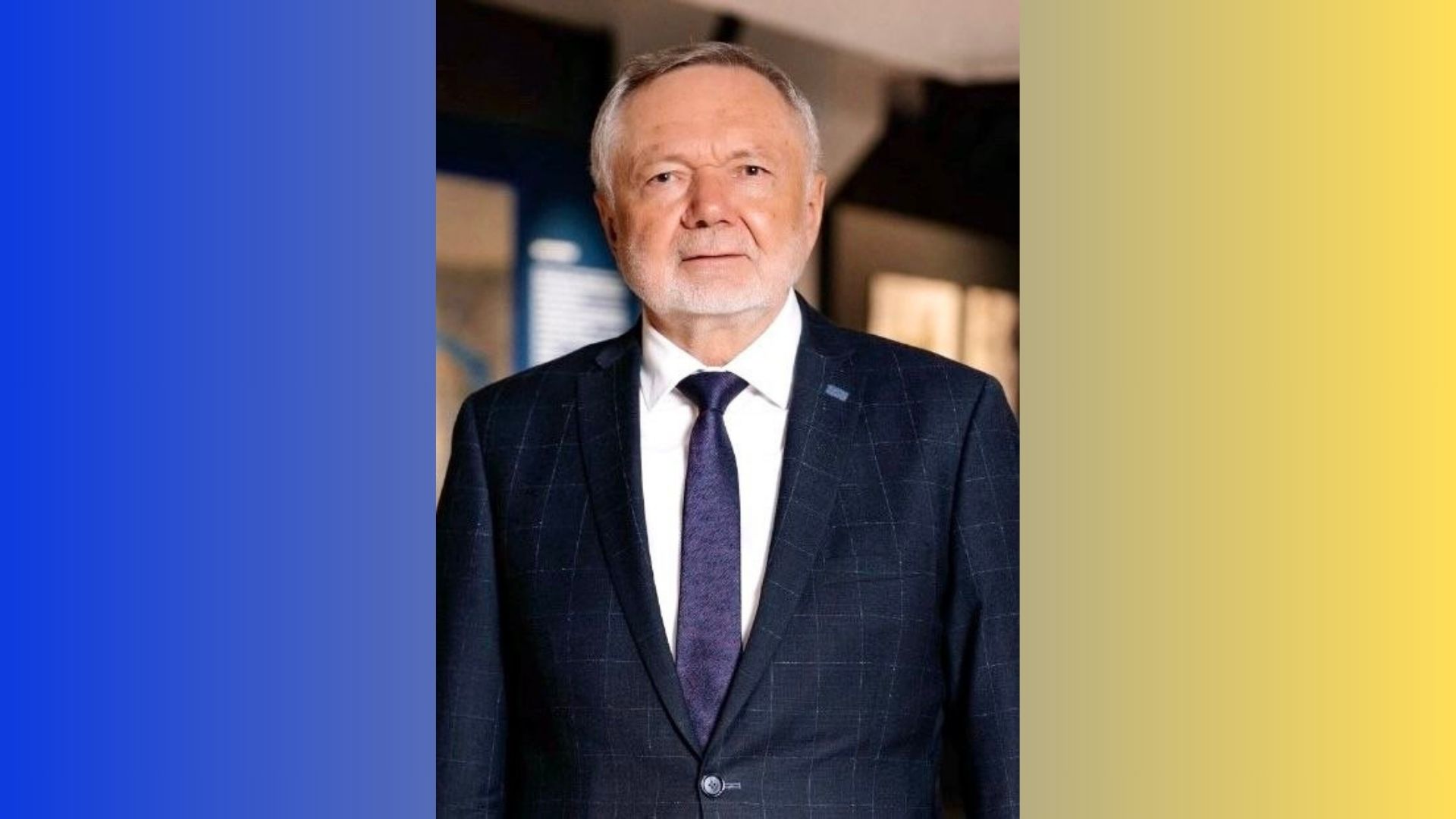
7 Insights into One of Ukraine’s Most Successful Art Exhibitions from Zenyk Art Gallery Founder, Entrepreneur and Philanthropist Zinovii Kozytskyi
«150,000 visitors, including more than 22,000 schoolchildren, 2,400 guided tours, widespread public interest, and positive coverage in Ukraine and abroad. The conceptual art project “HE: Taras Shevchenko. The Artist” was on view at Zenyk Art Gallery from February to June 2026. During this time, it became an event of national significance. I spoke with gallery visitors with great interest, seeking to understand the formula behind the exhibition’s success. Here is what I came to realize».
Zinovii Kozytskyi,
entrepreneur and founder of Zenyk Art Gallery (ZAG)
Culture matters more than ever
It may seem like an obvious statement. This was already clear when the gallery opened. Yet it was only during this exhibition that I fully came to understand just how deeply Ukrainian culture is needed by Ukrainians during this time of full-scale war.
Rationally, we know that many of our writers, sculptors, and artists are in no way inferior to renowned artists from around the world. That is something we know intellectually. But immersing ourselves in the creative world and biography of a Ukrainian artist organically placed within the broader context of global culture allows us to experience this truth and truly internalize it.
Many of the people I spoke with already knew that Taras Shevchenko was a brilliant European artist. Yet it was only after visiting our exhibition that they truly felt and understood this. After countless conversations and observations, I became even more convinced: culture matters more than ever.
People come first
The formula for a successful cultural and artistic project consists of many variables: the team, artworks, concept, style, venue, logistics, communication, funding, and more. But first and foremost, it is about people.
Every exhibition at ZAG is the result of the work of a tremendous number of dedicated and highly professional enthusiasts of Ukrainian culture.
In the case of the Shevchenko exhibition, this included the gallery’s permanent team, numerous contractors, and colleagues from the National Museum of Taras Shevchenko, who responded to our invitation to collaborate. Thanks to these teams and their leaders — Dmytro Stus from the museum and Khrystyna Berehovska from the gallery — we were able to create something truly remarkable.
At the same time, the workload for the entire staff increased significantly. Every day, from early morning until late evening, the ZAG team, led by art historian Khrystyna Berehovska, worked to ensure that visitors could fully immerse themselves in the art of the Kobzar.
I am sincerely grateful to the gallery team both for the visible results of their work and for the enormous effort that happens behind the scenes.
Communication matters
When planning the opening of ZAG, we set ourselves a clear goal from the very beginning: this place had to become popular.
For far too long, Ukrainian culture was presented through dry informational texts, dimly lit venues, and outdated approaches to organizing artistic spaces and events — approaches inherited from the 20th century, and in some cases even the 19th.
Our approach is different. We offer a contemporary space, light, and a wide range of technological solutions, including an immersive room, virtual reality, and a holographic wall.
All of these tools are designed to tell stories — about the gallery, the exhibition, and the life and work of Taras Shevchenko. Ultimately, they tell the story of our country and our people.
These stories are engaging and dynamic, and they are not told by people alone. Modern technology allows the protagonists themselves to speak.
One striking example is our 3D image of the Kobzar, projected onto a holographic wall made of LED fans, where a digital representation of Shevchenko recites his own poetry. The installation features a creative reconstruction of what Shevchenko’s voice might have sounded like, developed with the involvement of specialists from the National Museum of Taras Shevchenko.
Accessibility is a key principle
ZAG is an artistic space created in accordance with international standards of universal design, accessibility, and inclusion. I understand these concepts in their broadest contemporary sense.
First and foremost, this means ensuring physical accessibility for people with disabilities. At the same time, we also strive to make the exhibition accessible to people who may find it difficult to visit because they live far away.
This applies, for example, to schoolchildren and teachers from different parts of Lviv region. I will return to them shortly.
The gallery also embraces the principle of economic accessibility. On the last day of every month, we open our doors to everyone who cannot afford an admission ticket.
You may have seen photographs or videos of people forming huge queues to enter ZAG. These are the days when admission is free to everyone.
Meaning shapes the way we perceive
I have always liked the Ukrainian word “sens” — meaning, significance, or deeper meaning. I even launched an interdisciplinary project called “ZAG: MEANINGS,” where we seek to reflect on contemporary social and cultural processes.
On the one hand, “meaning” refers to the essence of a phenomenon, its core significance. On the other, it is a reason to act. We act — or choose not to act — depending on whether we see meaning in what we are doing.
The phenomenon of the Shevchenko exhibition’s popularity can also be understood through this logic.
For decades, the image of Shevchenko as an artist was overshadowed within the broader cultural image of “Shevchenko” by his identity as a poet. Our exhibition, however, deliberately shifted the focus and introduced new meanings into this established image. At ZAG, Shevchenko emerges as a European-level artist, innovator, and thinker.
And everything new naturally attracts interest. This is meaning understood as the essence of a phenomenon.
The Ukrainian perspective is in demand around the world
When we speak about meaning as a reason to act, I primarily mean a sense of mission and motivation.
From the very beginning of Russia’s full-scale invasion of Ukraine, we launched the “We and World” exhibition project, dedicated to promoting Ukrainian culture on the global stage.
At the same time, under the effective leadership of Khrystyna Berehovska, a professional team of young art historians and cultural studies scholars — graduates of Ukrainian arts universities — was formed.
Within the framework of this project, more than 50 exhibitions of Ukrainian art have been organized in different parts of the world — from North America and the Middle East to Australia.
Through conversations with foreigners discovering Ukraine, I saw the enormous potential of cultural diplomacy, as well as the strong international demand for Ukrainian culture.
I mean rethinking our artists, poets, and sculptors as European-level artists — vibrant and equal representatives of particular movements within European art.
The exhibition “HE: Taras Shevchenko. The Artist” serves this purpose exceptionally well.
This is reflected not only in the feedback from Ukrainian visitors, but also from international guests who frequently visit ZAG. The gallery has become a symbolic gateway into Ukrainian culture for many foreigners visiting Ukraine.
This spring, our city hosted participants of the international conference “Cooperation for Resilience.” The event brought together more than 40 international delegations, including 10 ministers of culture from different countries. The guests visited Zenyk Art Gallery and were pleasantly surprised. Several EU culture ministers invited us to organize exhibitions of Ukrainian art in their countries, and negotiations are currently underway.
Culture shapes our future
Ukrainian culture as a whole — and the Shevchenko exhibition in Lviv in particular — is not so much about our past as it is about our future.
Culture is security and a crucial element of Ukrainian resilience.
It helped our ancestors preserve their identity in the past, gives us strength in our struggle today, and will help us remain a strong and modern nation in the future.
Understanding this, the Russians have constantly attempted to Russify our artists. Those they failed to Russify were destroyed, while the fruits of their work were stolen, distorted, and appropriated.
It may sound unbelievable, but even Taras Shevchenko was subjected to attempts to portray him as a “Russian poet of Little Russian origin.”
But let us return to the future.
In March, Zenyk Art Gallery launched a charitable educational programme for schoolchildren from all territorial communities across Lviv region.
The goal of this project was ambitious and highly meaningful: to give our schoolchildren the opportunity to visit the exhibition, see Shevchenko’s works with their own eyes, hear his poetry, and understand the national and global significance of Taras Shevchenko.
The students were accompanied by Ukrainian language and literature teachers. They gained additional inspiration and knowledge about how Ukrainian classics can be taught in a modern and engaging way.
This practical “Lesson in Shevchenko Studies” was offered completely free of charge to 22,838 schoolchildren, who arrived at the gallery every day from Lviv as well as from the most remote parts of the region. Groups often travelled from other regions of Ukraine as well.
Investing in culture means investing in Ukraine’s resilience
The success of the artistic project “HE: Taras Shevchenko. The Artist” is compelling evidence that Ukrainians are eager to rediscover their own culture and its great figures.
Step by step, we are overcoming the inferiority and provincialism complexes that were imposed on us for centuries in order to enslave and exploit us.
Investing in our culture, reinterpreting it, and bringing it to the global stage means investing in Ukraine’s resilience and security.
We will continue along this path until Ukrainian artists are restored to the canon of world culture, where they rightfully belong as full-fledged participants.
P.S. In July, Zenyk Art Gallery opened a new exhibition — “OURS.” It presents the universe of Ukrainian folk tradition through the works of Maria Prymachenko, Paraskeva Plytka-Horytsvit, Nykyfor Drovniak, Ivan Skolozdra, and many other Ukrainian artistic geniuses.
I sincerely invite you to visit ZAG, draw strength from Ukrainian folk traditions, and be inspired by our own.
To be continued.
Source: NV
Original interview: “A Lesson in Shevchenko Studies”: 7 Insights into One of Ukraine’s Most Successful Art Exhibitions
Other news